
'An existential moment': Jay Atkinson on life, rugby, writing … and writing about life and rugby
The man from Methuen has written 10 books including Memoirs of a Rugby Playing Man. His new thriller, Storrow Drive, has a rugby playing hero. His love for the game runs deep


In the words of his publisher, Jay Atkinson “is an investigative reporter and rugby player who teaches writing at Boston University, the author of 10 books including the bestselling Legends of Winter Hill: Cops, Con Men, and Joe McCain, The Last Real Detective, and the award-winning Massacre on the Merrimack.”
Back when I was writing my own book, Brotherhood, and needed to deal efficiently with how the West Point rugby players of 2002 found their ways to the game, Jay’s work came directly to mind. The specific words were from Memoirs of a Rugby Playing Man, from 2012. Considering his own introduction to rugby at Acadia University in Nova Scotia in the 1970s, he describes a coming of age featuring the familiar lure of rebellion, drink, and low characters. But he also describes his discovery that when handed a rugby ball and told to get to it, “running full tilt into the opposition was an existential moment that could not be faked.”
Couldn’t agree more. Into Brotherhood it went.
Memoirs came out the year I moved to America, as I began to settle on American rugby as my subject, a while before I found my way to West Point. It seems a little odd that Jay and I have never actually met, even though we have plenty of rugby friends in common. Jay lives in Methuen, Massachusetts, precipitously close to a set of my in-laws, a rugby family in Lawrence, a city about which Jay wrote a novel, City in Amber.
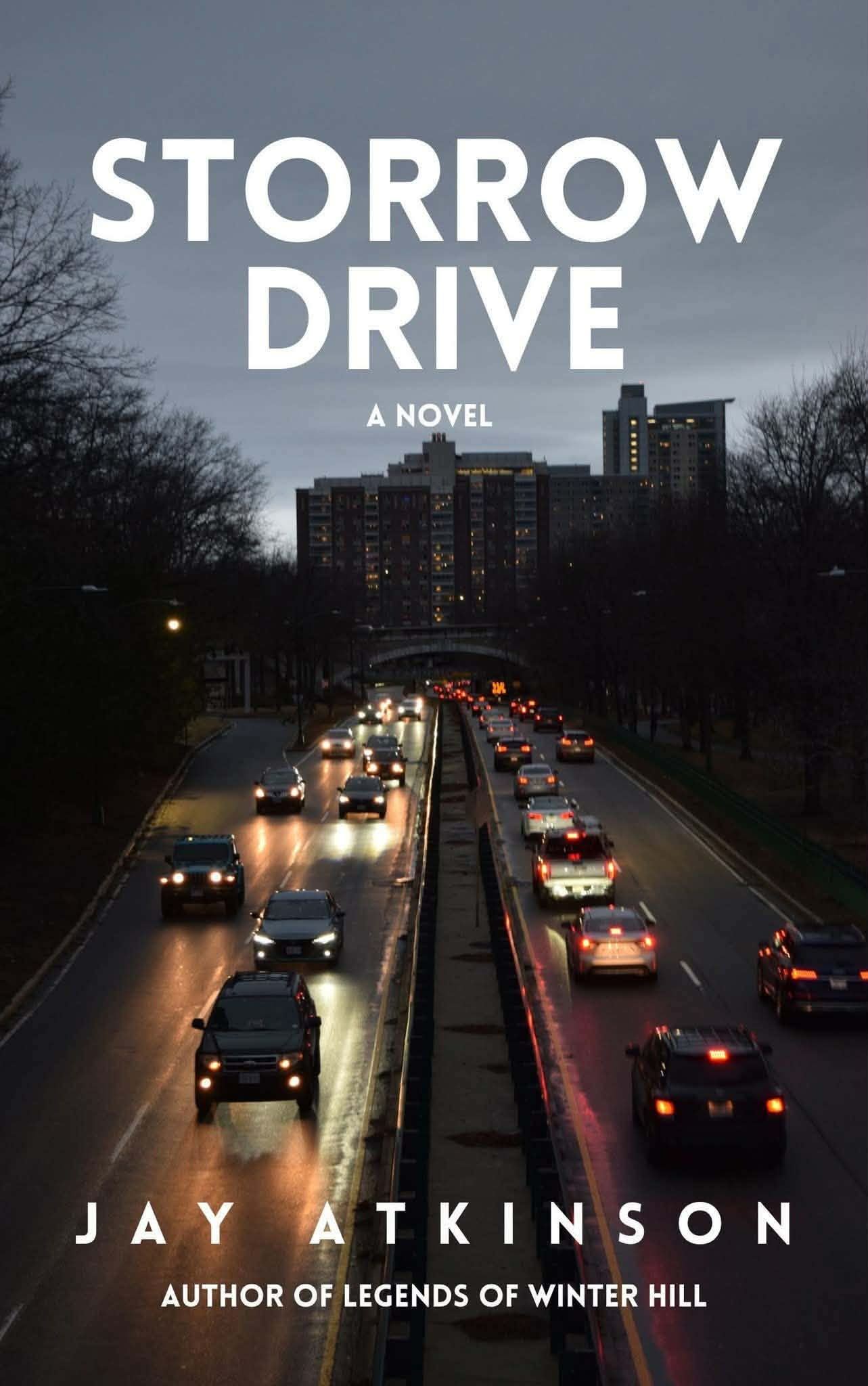
Regardless, when Jay asked if I would read his new novel, Storrow Drive, and perhaps give it a blurb, I was delighted to comply. Here’s the publisher’s description:
“When investigative reporter [and rugby player] Joe Dolan gets embedded with the Boston FBI Anti-Gang Task Force to research a story, he doesn’t worry. But then he’s subpoenaed to appear in court against a ruthless heroin dealer, and he realizes he’s now known to street gangs as a narc. Soon, Marco, the savage new replacement to the throne, wants to ensure Dolan won’t interfere again. Dolan must rely on his instincts and contacts in the underworld, crossing Boston on the T. His plight becomes a gripping trawl through the seediest underbelly of crime, where a misstep might end your life.”
And here’s my blurb:
“Jay Atkinson once described a rugby tackle as ‘an existential moment that could not be faked’. Sorrow Drive is full of such moments, a propulsive, percussive crime thriller that moves like Antoine Dupont and hits like Ardie Savea.”
Now, here’s Part II: a National Maul “American Rugby Life” Q&A, an honor only true greats — Mark Cuban, Julie McCoy, Kerri Heffernan, the Lizard — are ever accorded.
My conversation with Jay took a sometimes winding path, rather than sticking to analytical interviewing techniques. But as that can be put down to the sheer delight of finding someone with whom to discuss proper rucking, cotton shirts, plunge baths and the prose of Siegfried Sassoon — count yourself lucky I cut the diversion into the novels of Cormac McCarthy — I decided to present most of it as spoken. It’s still long, but like Jay’s books, it’s entirely worth your time.
So: what’s the rugby story? I’ve read Memoirs of A Rugby Playing Man, my copy’s in front of me, but pretend I haven’t…
I’m from Methuen, Massachusetts, but I went to Acadia University in Wolfville, Nova Scotia, in the late 1970s. I ended up being a varsity wrestler and a soccer player, because the hockey was so good I wasn’t going to make the team. I was coming out of soccer practice one day, and two rugby players were coming through the gym, and they asked me to come out for rugby. I knew about it. I’d seen it, but I hadn’t played it. And so I said, “Where’s the field? ”And they said, “Crowell Tower.” I said, “What time?” “Five o’clock.”
And so I got there and there was maybe 10 players sort of playing sevens. I realized you could grab the ball on the ground and go run and chase it and pick it up. I scored two tries in the first 10 minutes, once I figured out they can’t touch me when I don’t have the ball. One of the best rugby players, Rob Murray, he wasn’t at practice so they told him, “Yeah, we had this guy. We nicknamed him Grubber.” I only ended up playing one match because it was the end of that spring season, which is very short in Canada. It looked as if I’d scored a try. The referee was about 70 years old, and he was about 50 yards back, so he said, “Oh, that had to have been forward pass.” I was like, “No, it wasn’t.” But okay, that was my introduction to rugby.
We ended up at the Anvil Lounge, the referee included, all of us in just our stocking feet because they made us leave our boots outside. The referee explained, “You did very well. Might have been onside, and it was quite a clever play, but I have to call that because I can’t really see it.” And I said, “Yeah, that’s painful, dude.” But I was like, “Oh yeah, this game is me.”
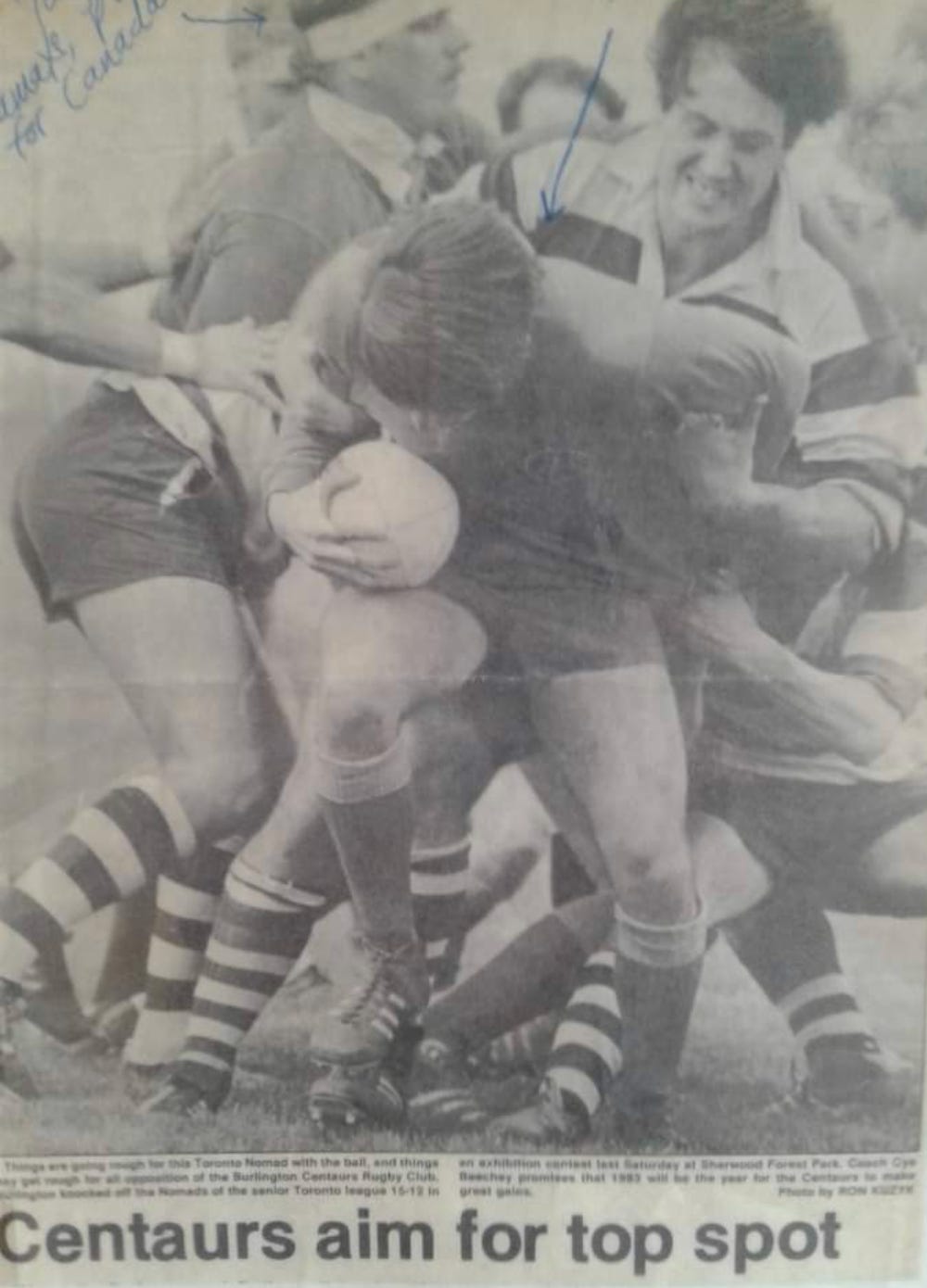
I went to law school in Denver. I played there for Mile High Rugby Club. That was my first complete season. Started on the wing. Then I dropped out of law school to go to University of Florida, to the writing program there under the great novelist Harry Crews. And I hadn’t gone there yet, so I started playing playing back in Canada. I went to Burlington, Ontario, to the Centaurs. They took me on tour to England and Wales, all expenses paid for three and a half weeks. It was just a couple months after my father died of a heart attack. They sent a big floral arrangement all the way to Methuen, and the coach called and said, “Listen, lad, I know you’re having a hard time. Call me back in a month. The boys really want you on the trip.” And sure enough, he called and everything was paid for except my flight from Boston to Toronto.
So that was my introduction to really good rugby dudes. It saved me. The coach said, “What are you doing? Like, hanging around, drinking with your friends?” I go, “Yeah.” He goes, “Yeah, you want to get out on the rugby tour, boy.” Of course, there was some drinking there too.
How did you migrate from winger to hooker?
When I got to University of Florida, they had like 50 guys out and it was really good program. We had a full-back that played for La Plata in Argentina. We had two flankers that were British schoolboys. One was a Trinidadian guy, but he had gone to private school in England. And then our fly-half was a Scottish guy. We had a New Zealander at loosehead prop.
We had probably eight players in the starting 15 from outside the US, so I started on the B side. I started playing center, because I could handle the ball and I could kick it. And then once I got closer to the A side our coach was a South African. Great guy, still down in Gainesville. Jon Van Blokland. Within two weeks, the hooker from England, he got hurt, and they were trying out three guys for hooker, and Coach goes, “Why don’t you just jump in?”
So the first two balls they put in, I stole it from the other guy. I didn’t really know what to do. I just said, “Why is he leaving the ball right there?” And so from then on, I was hooker. For two years, I didn’t miss a game. I made the Florida Select side. We went to Argentina, Chile and Mexico. We had a good run, and a lot of it was because the guys that were playing at University of Florida, they stayed in Florida after they graduated.
I was back home in Boston, which was a good side, but they told the Selects coach down in Florida, “Look, we got a guy in Boston that’s much better than the three guys you got. So why don’t you buy him a ticket down to Miami, and then take him with you.” And so I got to go on that tour, and it was fantastic. There was a coup in Argentina when we were there. The money was worthless overnight, there was martial law, and we were all out on the street. The only people out — all the rugby guys. Like, “You got to see this, man, this is a coup.” It was a rush, all that happened over the course of, like, four years.
We played in Mexico City, in the stadium where Bob Beamon broke the long jump record in 1968, and there was the Florida Select side playing the club champions of Mexico. We had a great No8, this kid Rick McBride from Miami. He called himself “Ocho Man.” It was raining, the field was wet. He broke through, he laid the ball off to me, and I scored a 35-yard try, and it was in front of the most beautiful women I’ve ever seen. All the Mexican girls were like, models. I was like, “Oh my God.” So that was a great trip. And that was the same guys I played college rugby with. They were the core of the Select team.
Any other clubs?
The most fun I’ve ever had playing rugby, there’s a guy called Frank Baker, Associated Press editor-in-chief in Los Angeles, and he played with me at Amoskeag in New Hampshire. Then he moved to Rhode Island so we lost him, and we had to play against him. He could make kicks from 50 yards out. He went to Washington, D.C., and played there, and that’s how I met Duma, Steve Johnson, and all the guys there. Frank ended up in California, from where he put together a team called the Vandals, using the best players from all his teams.
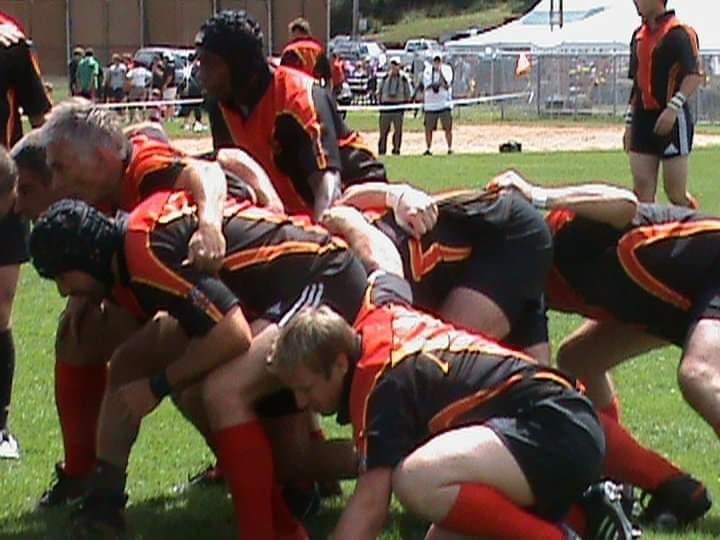
I must have played 10 or 11 tournaments with the Vandals. We won one tournament outright, and we were all over 40. Placed in three or four others. We played some great rugby. They would just call you up and go, “Hey, can you get to Vegas by this date?” Some of the best players from Amoskeag got onto the Vandals. Surfer John Hearin, my roommate and rugby teammate from University of Florida, he got on the Vandals. It was almost like all your brothers, going to all these cool places, then go home, and within three months, get another call. It was fantastic. I played my last competitive game at 56.
That’s around about the time of Memoirs of Rugby Playing Man, right?
That’s about the time when I had to start writing about it because I couldn’t play anymore. My last game is legendary among the Vandals.
Why?
We were playing Northeast Philadelphia Irish. When my book came out, my publisher sent me to the collegiate sevens down in D.C. I had a booth with books for sale. And these guys came over and said, “We’d love to play the Vandals.” And I said, “Okay, you know, this team is over 45, but it’s real good.” And so they say, “Yeah, sure it is.”
We’re in the hotel the night before and Chris Pierce, my friend, he’s not lacking in confidence, he’s our inside center, is sitting with two of their guys, and they said, “We’re going to put out our B side against you guys, because you guys are old.” Chris said, “If you put out your B side, we will embarrass you.” And they laughed. Like, “Yeah, sure. Sure you will.”
So we get to the field. First thing you got to do is you got to walk the length of the field to pick up all the hypodermic needles. What a venue, right? And then we scored three tries in the first 15 minutes. And so then they ran their A side out, and we scored 35 more points on them. We were just running crazy all around them, the best guys from the east coast, the best guys from California.
At the end, they’re going to kick off one more time. And I’m up close to the kicker. I knew the guy. I knew he was going to kick an up and under and try to get me up in the air and try to nail me on the ground. But what I didn’t see was they had recruited this guy, a D1 heavyweight wrestling champion. NCAA division one, big, fast and mobile. He was playing second row, and he didn’t really know how to play.
So I go up for the kick. The guy picks me out of the air, his hands over his head, and then he pile-drives me into the ground and breaks my ribs. I get up, I get to one knee. All my teammates, they go, “That was fucking assault.” The referee is their player, and he says, “Are you gonna go off?” And I’m on one knee and I say, “I’m gonna rejoin play.” I go, I get onside. I get 10 yards back from where this wrestler is struggling through our guys. I run, I go up in the air and I head-butt him right above the eye. Split it wide open. And Steve Johnson, real close friend, he said, “I’ve never seen a white guy jump that high. You must have been pissed.” I go, “I was seeing red, dude, I don’t like when people cheat. The game’s hard enough.”
You ever see Field of Dreams? As soon as I stepped over the chalk line to leave that rugby field, I said, “Fuck, I just played my last game.” So I’m walking by the wrestler. He’s got a huge cut on his head, a dirty towel around it, the blood’s all over his face, and he’s biting the tops off of beer cans. He says to me, “I like the way you play the game.” I say, “You don’t know how to fucking play the game, dude. I suggest you find something else to do.”
My friends were like, “That’s awesome.” I saw guys who were just big and fast. But I never saw one that was dirty like that.
Last game I ever played was with a Welsh touring team in Europe, and the captain was a second row for Ospreys and Wales A. Terrifying. That’s when you look up at someone and think, ‘Oh, he’s different…’
Were you were you there and they let you pick up a game? Did you go with them?
I was working for Rugby News magazine. It was in Slovenia.
Awesome.
It was a good week. I wasn’t really into the drinking and the chaos much, and my opposite number was this big boy, one of the most frightening people I’ve ever met. But I was playing for the Slovenian champions, like you do. The openside flanker was the Slovenia captain. He was good.
The coolest place I played was Fiji. I helped set up the only try we scored, and the fans cheered. There was some unrest in Fiji, there was a coup, like two cops took over the government with handguns. And so they said, “Don’t leave the complex.” But this guy says to me and my teammate, “You want to go to my village?” So we did.
We’re walking through the sugar cane fields, it’s tropical, we’re in shorts and flip flops. And he goes, “Oh, I forgot to remind you, there’s poisonous snakes in here.” So we get to his village and it looks like fairly new condos but in this clearing, jungle all around. He goes, “Come on in.” We go in. There’s no plumbing. We’ve been drinking beers, I got to take a leak, and he goes, “Bathroom right here.” There was a goat tied up in the bathtub.
We go into the living room and everybody’s drinking kava. There’s one guy playing the guitar, we’re all sitting in a circle. I knew about kava, we had done it one night before at the hotel, but this was all the guys we just played against, and one of them was sitting next to me and he was a beast. And so after about 40 minutes of kava, passing it around, this kid was probably 20 years old, and I was 30. He hadn’t looked at me the whole time. He looked at me. He said, “Do you love rugby?” And I answered honestly. I said, “Absolutely I do.” He said, “So do I. We are brothers.” And we, like, locked forearms. I’ll never forget that.
I’ve drunk kava with Fijians too, although randomly, in Tel Aviv.
You got to play there?
No, writing. Holy Land Sevens, 2001. Teams from Belgium, Georgia, Israel, Poland, Malta, and what was marketed as Fiji but was actually a team of peacekeeping troops from the Sinai.
Unreal.
We ended up on the English-speaking bus. Wailing Wall, Via Dolorosa, Golgotha. Honorary Fijian for a few days. Drank quite a lot.
Fiji is wonderful. One of the most exciting tours in my life. I love Fiji. I love the Fijians. I wish I played more so I could play with them. Wonderful.
I tend to make friends with big second rows because I am one. In that case, a Fijian officer called Alex. I’ve still got his shirt.
That’s awesome, dude. Do you have lots of old rugby shirts you still wear?
Yeah, though I dug out the last England replica shirt I bought for this year’s Six Nations, and it didn’t bring me luck.
I have three of my rugby jerseys in the closet, and two hockey jerseys I wore, and the soccer jersey I wore for Acadia. One time, I had nothing to do, I spread them out on the floor and took a picture. There’s people that recognize certain things, like, “Oh, that’s the Amoskeag jersey from this tour. That’s the first hockey jersey anyone ever wore, the blue and white from Methuen High. It’s amazing how people could remember.
Such moments must be fuel for writing, such as Memoirs of a Rugby Playing Man.
Yeah, it’s in there. That was an easy book to write. So much shit happens, so many characters, so many funny situations, so many poignant situations. It’s easy to write.
Your first published writing about rugby was in your first novel, Caveman Politics, right?
If you look at my career, Caveman Politics (1997) won a prize. It was selected for the Barnes & Noble Discover Great New Writers program. It got a good review in the New York Times. And the central character, Joe Dolan, was a 26-year-old rugby player, right out of college. Ostensibly, he would have been from University of Florida, but I don’t mention that.
So he and his roommate, Surfer, they’re both playing for the Cocoa Beach Rugby Club, which, at the time didn’t exist but does now, because that’s where Surfer was from in real life. My character is working for this newspaper with a circulation of 15,000. And he’s writing some investigative type stuff. And what ends up happening, happened in real life. Both these books — Joe Dolan, 20 years older, is also the protagonist of Storrow Drive — their germination was real-life stories.
So in real life, we had one African American player at the University of Florida. Mike. He was from Trinidad. Surfer and me roomed together with one other rugby guy, and Mike was living in graduate housing. He was an architecture major. Real smart guy. And one night Surfer and I saw Mike at a bar that everybody goes to in Gainesville, and he’s dancing with this white girl, and they’re having a good time. He sees us, and he calls us over, and he buys us a drink, and we talk to them, and we have a few laughs. Then we see another rugby player that we know, so we go talk to him, and then we end up leaving.
Next morning, we go to the big breakfast place in town. Who’s there? Mike with the same girl, holding hands, drinking coffee, laughing. Invites us over and we sit with them again. We talk. We get our breakfast. We go to the other part of the restaurant, I don’t see him for a little while.
Her boyfriend comes back into town. He’s a long-distance trucker, and he starts accusing Mike of raping his girlfriend, and his girlfriend backs him up because she’s embarrassed and she’s caught cheating. So Mike ended up a shell of himself. He was a real good loose forward. About 175lbs, ran like the wind. The last time I saw him, I went to say goodbye to him. Only me and four or five other guys, mostly north-east guys, stood up for him. I got into some very heated debates with some of my teammates. So that was the genesis of that book.
It’s all laid bare, on how things really occurred. And then here I am, 10 books later, and Joe Dolan is now a 47-year-old adjunct professor at an unnamed university in the north-east…
One of the reasons I dived straight into Memoirs of a Rugby Playing Man was its link to Memoirs of a Fox Hunting Man, by the English war poet Siegfried Sassoon — who provides the epigraph for Storrow Drive too.
I just love Sassoon. The other thing is his good friend that saved him from being executed for cowardice, even though he was the bravest soldier in World War One, was Robert Graves — and he was a rugby guy too.
In high school and college, into my 20s in London, I was playing twice a week with those guys’ books in my kitbag.
I found out about Sassoon because I was a creative writing major. I read a lot of books in grad school, and undergraduate, I was a philosophy major. And so the first college chair that hired me to teach was Lou Ureneck, who was newly hired. Somebody suggested I go meet him. He sat with me, we just talked for an hour, and he hired me. I taught one class the first semester. There was only one class open, but he had Sassoon, he had Graves. I knew Sassoon was a poet, from my days at Acadia. War poetry was one of the classes I took. But I didn’t realize he wrote these memoirs that were just beautifully written.
Going back to the writing. In Storrow Drive, Joe Dolan at age 47 is living a precarious life because he’s a journalist and teacher for hire, which is what I do. And he knows all these people in law enforcement. This is also true to life.
How I got access was, when I wrote Legends of Winter Hill: Cops, Con Men, and Joe McCain, the Last Real Detective, I met all these young state troopers that were under the guy that was the subject of my book. So I just stayed in touch with all those guys and now they’re older troopers.
I got access to an FBI task force because the deputy director of the Boston FBI, I coached his son and my son together in baseball and soccer. And so he knew me, and he knew I could be trusted, and he knew other cops trusted me. And so he brought me in. The scene is in Storrow Drive. The agent in charge took a meeting with a guy he didn’t know.
And so the FBI agent starts talking a little bit, and he says — this is the kind of thing that can only happen if luck is going your way — he grew up in Massapequa, New York. So I said, “That’s funny. I was a wrestler. I wrestled for three years, and one of my teammates was Jay Buckler from Massapequa, New York.” And he goes, “126 pounds, favorite move the cradle?” I go, “How the fuck do you know that?” He goes, “I wrestled Jay Buckler. I was at the next school over. He was tough. Long and hard, you couldn’t get him on the ground.” I said, “That’s amazing.” The conversation continues. I go, “Where do you live now?” He goes, “I live in Hamilton, Mass.” My brother in law and my sister, they live in Hamilton. I name them. He goes, “John Berry from Hamilton?” Yeah. He goes, “I played behind him at quarterback for the football team, first line center for the hockey team and shortstop for the baseball team for three years until he finally graduated. Then the FBI agent looks at his guy and goes, “Jay can go anywhere he wants, do whatever he wants.” And so I was off on the book.
That’s the kind of story that applies all over the world. Sports breeds trust, as it were.
It happens. It was a weird set of circumstances, because the whole meeting lasted like 20 minutes and I had permission. “Oh, that’s pretty fucking cool.”
I mean, you get into the rugby world, you meet all kinds of interesting people, you have friends wherever you go. If you can find anybody in your world that plays rugby, instantly you’re a team. It’s amazing. I could go get a place to stay for free in California just because Frank Baker lives there.
It’s what Mark Cuban told me about his rugby days in Indiana: There’s always a couch. There’s always someone crashing with someone else.
One other rugby story I have that comes to mind is from when I was playing with Burlington Centaurs in Canada. There were at least nine Welshmen on the field at all times but there were also three Englishmen, including this guy Steve Carter, a Gloucester man, who I became quite close with on tour in England and Wales.
I was like an outsider. Really, I was the only person that wasn’t from the UK on the team. So we go overseas. At first, Steve and I are rooming together. I’m 26, he’s 35, he’s got premature white hair. And we’re walking around town in Wales and we run into the guys we’re playing next day. The starting hooker and one of their props. I’m like, 150lbs, and they start asking what position I play, and I say hooker. And they go, “You’re going to get your wings tomorrow.” I don’t really know what’s going on. And Carter doesn’t know me, really. I hadn’t been around like four months. So he doesn’t say a word.
We go into the match — they lift our scrum off the ground three times. It was the most terrifying thing I ever saw in my life. There was no rule against it back then. And so the guy that was playing loosehead. Jeff Coles, Colesey, was an Englishman, and he was monosyllabic, hardly said hi to me at all. Once I sustained my cool and I played the whole game, and I never came out of the game, and then the second half, I actually did some things I should have been doing all along, like cleaning up loose ball, picking up the ball and setting up rucks, things like that, we sat next to each other in the bath and Colesy put his arm around my shoulder, and he was saying, “He’s a good lad, isn’t he?” Steve and I were rooming together. He goes, “I sleep with Jay every night.” So I was totally part of the club, right?
The last game, we’re playing the Cambridge University Old Boys, and we had a good side out, and Steve Carter was on the field the whole game at scrum-half. Happened twice, they tried to out-kick our coverage, down into our end of the field, and I hustled all the way down, picked it up, got drilled from behind, got up again, went three more yards, got drilled again, and then finally Steve circled all the way around, took the ball from me, got to a good angle and kicked it out of bounds, about 50 yards. And he said, “That was good work, lad.”
Weighty words. When was that?
It was ‘83 we won two matches, and we were in two matches with like county champs that beat us pretty bad. I played five out of the six games. After the tour, I wasn’t going back to Canada. Before the last game, Steve had me say a few words to the boys, because everybody knew I lost my dad and all that stuff. I go out there, we’re all in a huddle. It’s raining. Steve looks at me and goes, “You’re not gonna give another fucking speech, are you?” We didn’t win that game, but we were in the game. In the mud. And I was just so happy to play one more game. I was like, “Thank you guys. It was awesome.”
How do you arrive at your descriptions of rugby? I’m thinking of it ‘like being trapped in a tipped-over phone booth while a gang fight rages all around you.’
That’s how it’s like in the front row when you’re 150lbs, yeah? Hopefully what I write maintains the integrity of this sport. I met one kid, a dirty player that played in Albany, New York. He would lunge across the front row. He was doing it to intimidate people. I couldn’t intimidate anybody at 150lbs, so my best weapon was the occasional head-butt when they didn’t know who gave it.
Is writing about rugby something you find easy? Rewarding? Natural?
It’s just my natural style, I guess. I would just think about how to describe it to people I knew from other sports, like my hockey friends or wrestlers. It’s very similar. You’re battling in this limited space and your grip is all you have. So that was a way of describing it to a larger audience.
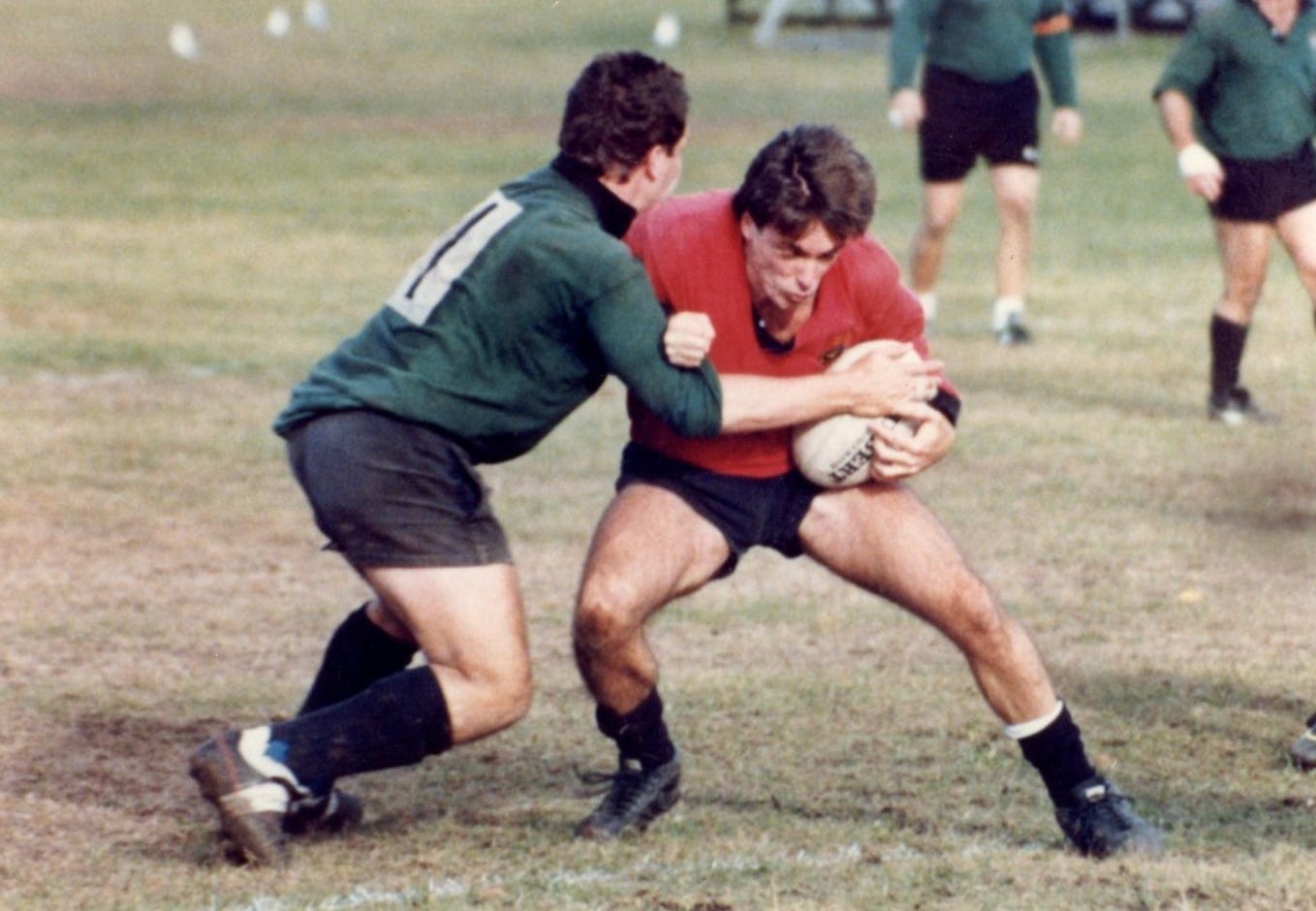
The “existential moment” would be anytime I came out to play. There’s a real good picture someone took when I was playing for Amoskeag, pretty early in my career, and I picked up a ball no one saw, on the other side of, like, a pile. I picked it up, and there was one guy waiting for me. I’d say he was 50, 60lbs heavier. I was running in slow motion toward him, on purpose in long strides, and at the last second I made three quick strides, and I stuck the ball on my outside hip so he couldn’t get at it, and I hit him as hard as I could with my shoulder, in the solar plexus. He didn’t move, but the ball didn’t move either. Our scrum-half stripped it from me and we went down the field. So that thought process was like, “Okay, I’m gonna just try to fool this guy. I’m gonna go slow at first, like it’s slow motion, like springy running, kind of an accelerate, like you have to as a hockey goalie. You have to accelerate quickly. Have to have quick reflexes. So I’m just going to go into him a little higher than he might expect, and hopefully we have someone there.” And sure enough, our scrum-half was Johnny on the Spot.
There’s a bar. If you’re ever in Jackson, New Hampshire, you want to go in the Wildcat Inn & Tavern. It’s owned by a rugby guy, Stu Dunlop. When I got an honorable mention for the University of Florida Hall of Fame, I didn’t go down to get the plaque, because I hate going to Florida. It’s so fucking hot down there. So Stu took that picture, and they took the letter that I was sent that explained why I was in the Hall of Fame, and then he took some other piece of an article that was written about me, or something like that, and he made it into this plaque, and didn’t tell me. So then I’m in the Wildcat Tavern with rugby guys, I have a few drinks, and Stu goes, “Come and see your plaque.” You’ve got to go to his bar, because he’s a rugby guy. He started, like, two rugby clubs. Portland Rugby Club in Maine, and then in Conway, New Hampshire. And so all the jerseys of all the New England teams are pinned to the ceiling. And my plaque is to the right of all that.
This kind of thing is why I quoted Memoirs in Brotherhood.
I appreciate that, man. You know, we didn’t talk that much about writing, except for, like, some of the emotional language. You ever heard of the 1940s and 50s sportswriter, Red Smith?
Yeah.
He won a Pulitzer as a guy just covering the ballgame. He’s doing baseball game reports, he’s writing them and sending them to the copy boy across town. So someone asked him when he won the Pulitzer, is writing easy? He goes, “Yeah, I just open up a vein and bleed.” That’s how I feel.
Sometimes it comes when I’m out doing something. I’m into open water swimming, I do some running in the woods, I do some mountain biking, where I’m alone. I’ll always have one of those little scratch pads in my backpack. Sometimes I’ll write on the fly but it doesn’t always come. I like being in motion. I have to have the paper handy. As soon as I get out of the water, I have to get into my backpack and start writing down stuff I was thinking.
So you know, that Red Smith quote. The stuff that comes easy sometimes for me comes as part of engagement with the landscape, just being out on the lake or being usually alone, because if you’re talking to one of your friends, you’re not thinking about the story. When I’m mountain biking, I’ll come back to the car and I’ll write in the notebook for a half-hour and then say, “Okay, some of this I might save, or whatever.”
Compared to that, Red Smith was a guy that had to produce it every day. With game reports. Literature like that doesn’t usually happen.
Storrow Drive is published in the US by Livingston Press
Unconverted Tries
Saturday April 11 will be rugby day in Sacramento, CA, as the Collegiate Rugby Association of America hosts its women’s championship games on the same slate as two Pacific Four Test matches at Heart Health Park, home to the Sacramento Republic of the United Soccer League. CRAA’s D2 championship game will kick off on the Friday night, before on Saturday the D1 Challenger Bowl and Championship Game precede the US Eagles women against the Black Ferns of New Zealand and Canada against Australia. Says CRAA president Paul Keeler, “This year’s fifteens National Championships are shaping up to be an amazing slate of match ups, with teams knocking on the door for a spot in Sacramento and finalists to be confirmed by March 28. The CRAA National Championship series is a premier pathway to USA National Team opportunities, so the synergy for both events is palpable and we’re excited to see everyone come together.”
I’ve decided to quote the intro to this Sports Illustrated story about Ilona Maher verbatim, because … it is what it is, which is something that doesn’t include the word “rugby,” which therefore makes it something that makes me feel old. Here goes: “Ilona Maher is proving that 2025’s corpcore trend is here to stay with her latest Instagram post. The Olympian stopped by social media on Monday, March 16, to give her 5.4 million followers a closer look at her latest coordinating ensemble, which was a perfect mix of business and casual. She styled the set while attending the IMPACT Speaker Symposium, with the brand noting on Instagram, ‘This year’s theme, ‘Power & Personality: Leading with Strength On and Off the Field,’ comes to life with Olympic bronze medalist and cultural powerhouse Ilona Maher.’ So… yeah. I’d prefer to see Maher be a midfield powerhouse for the Eagles in the Pacific Four. But then, I would.
Argentina wants to stage the men’s World Cup across South America in 2035, four years after the tournament comes to the North. “We want a World Cup that reflects the passion and development that rugby has achieved in every corner of our territory,” said Gabriel Travaglini, president of the Argentine Rugby Union, as quoted by the BBC. Couldn’t agree more. #VamosLosPumas. Given my day job on politics, though, and its present domination by the Iran war, part of the next paragraph gave me pause: “Japan and Spain have recently confirmed their intention of bidding for the tournament, while Italy have previously expressed an interest and a joint Middle East bid, incorporating Saudi Arabia, Qatar and the United Arab Emirates, has also been rumored.” … Okay.
Further reading, watching, listening
Jay Atkinson’s Memoirs of a Rugby-Playing Man — Remembrance of Punches Past, Bill Marx, The Arts Fuse
Boston noir fiction: Q&A with Jay Atkinson, Boston University College of Communication
Siegfried Sassoon: The reluctant hero, Laura Barnett, Guardian
MLR Weekly by Rugby Wrap Up: New England [almost former] GM Tom Kindley, HSBC 7s NYC, College Rugby, Matt McCarthy, RugbyWrapUp
I Met Eddie Hearn, And His Take on Rugby Is Hard to Ignore, Will Hooley, Substack
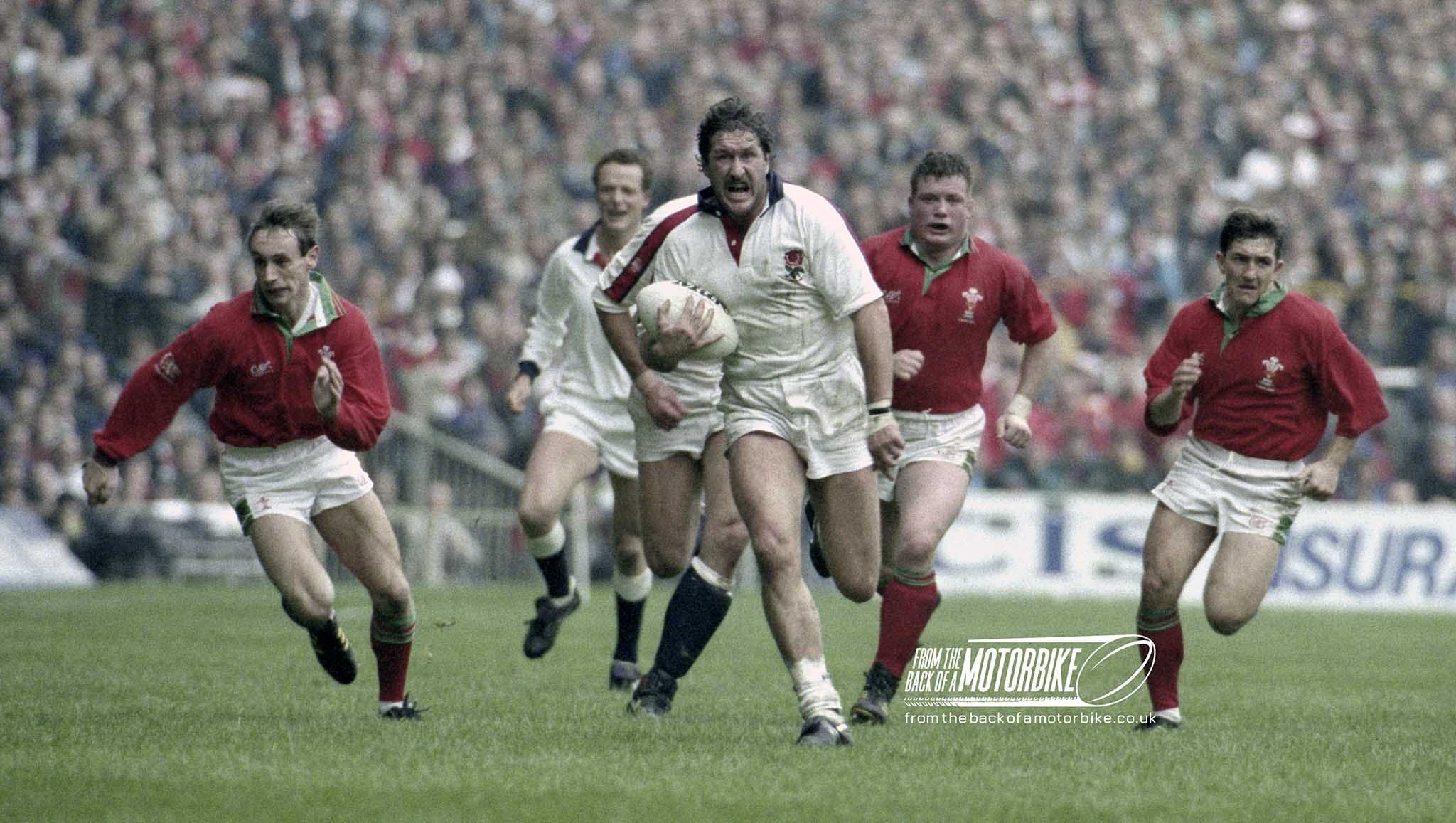
And finally, a gratuitous picture of Iron Mike Teague in his prime…
I must check out Jay's books, they sound good. The only other crime fiction books I can think off featuring a rugby playing sleuth is Peter Lovesey's Peter Diamond series, the protangist an ex London Rugby player now living in Bath. Although rugby doesn't really feature, its part of the character's back story.